Why Skipping Home Prep Costs Howard County Sellers the Most (Real Before & After)

Quick answer: In today's Howard County and Central Maryland market, buyers decide how they feel about a home within seconds, and they mentally over-estimate and add up the cost of anything that looks dated or unfinished. Homes that are prepped well before listing tend to sell faster and draw stronger offers than homes that skip prep, even in a competitive market. Below are real before-and-after pictures from some of our listings, plus the shortcuts that tend to backfire most.

“Can't We Just Skip It?”

We often hear this question from sellers in Howard County…and all over Maryland! They ask “Can't we stretch the carpet instead of replacing it? Won't buyers just paint anyway? Can't they swap the light fixtures themselves?”

These are totally fair questions. Selling a home already feels like a lot, and cutting a corner or two seems like an easy way to lower the stress and the cost.

But after 20 years selling homes across Central Maryland, here's the pattern we see over and over: the sellers who walk away with the best outcomes - the fastest sales, strongest offers, smoothest closings - are almost never the sellers who took shortcuts. They're the ones who planned ahead and executed on our advice.

Why Home Prep Still Matters in Today's Howard County Market

Buyers touring homes right now are seeing a lot of options. When they walk into yours, they're forming an impression in seconds and mentally calculating how much work they'd have to do after closing.

Here's the part most sellers don't expect: buyers tend to overestimate what updates cost. Dated flooring, vertical blinds, an old vanity, a ceiling fan from 2003…buyers don't see an “easy fix.” They see “a lot of work.” And that hesitation shows up either as a lower offer, or more likely, no offer at all. When we receive feedback from the buyer’s agents, they say “the buyers felt the house needed too much work.” The buyers move on.

A move-in-ready home does the opposite: it gets buyers excited, invites competing offers, and moves faster.

A Real Before-and-After From Howard County

We recently worked with a seller who made a handful of targeted updates before listing. Here's what we recommended, room by room.

Living Area

 
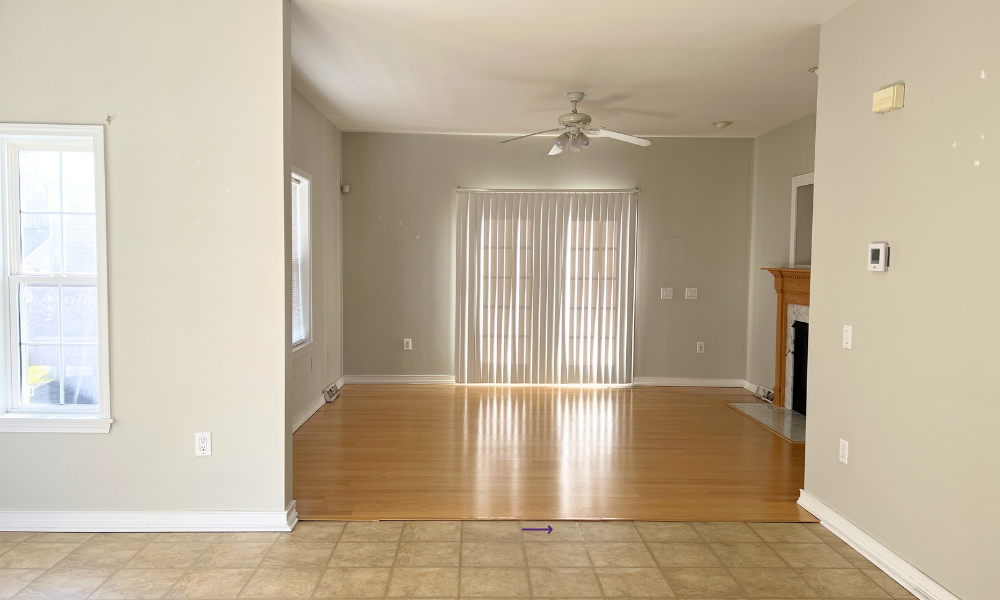
•	Living room before staging with mismatched flooring and dated ceiling fan, Howard County MD home
 

Nothing here was broken…but nothing said “move in and enjoy your life,” either.

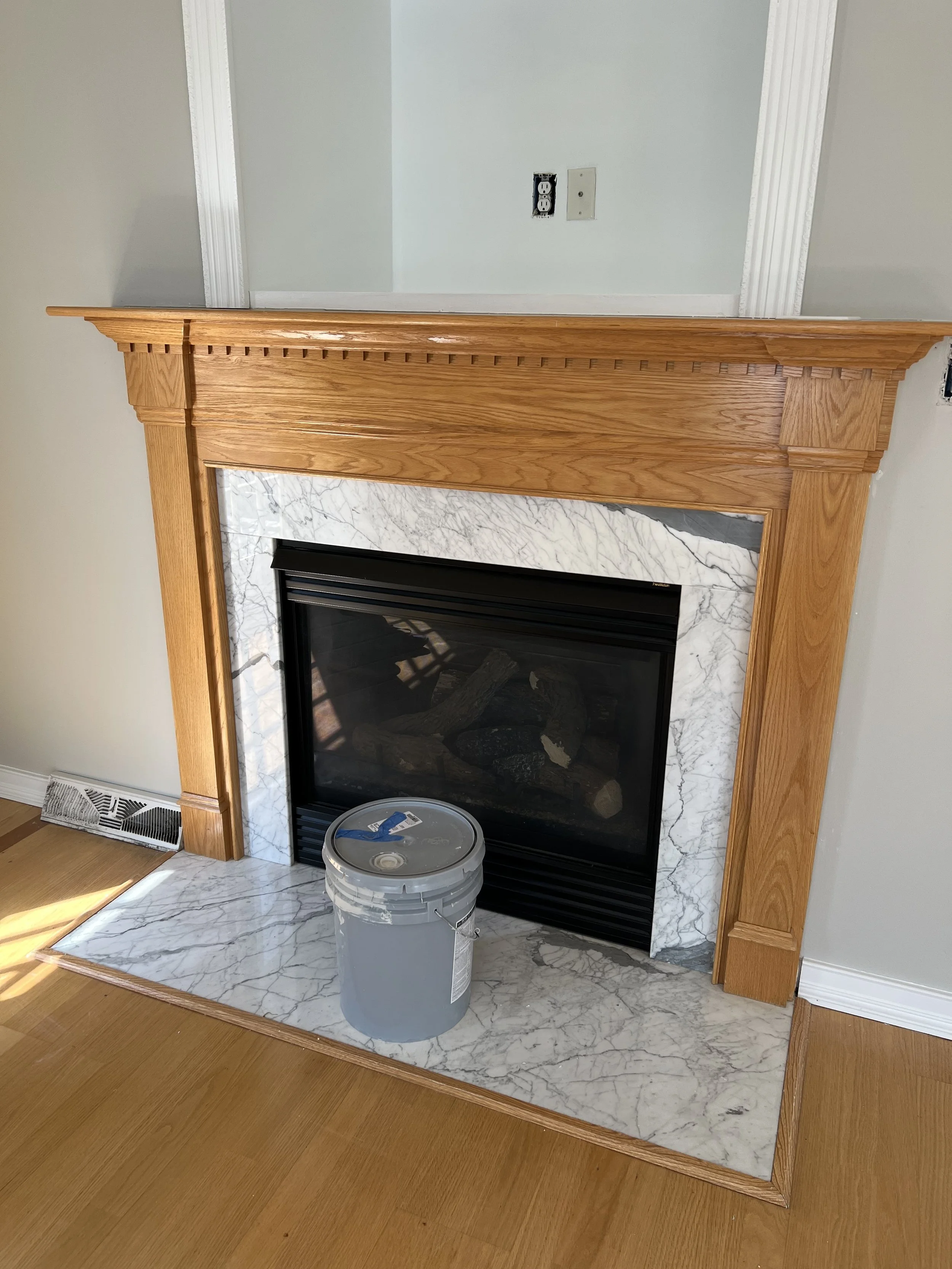
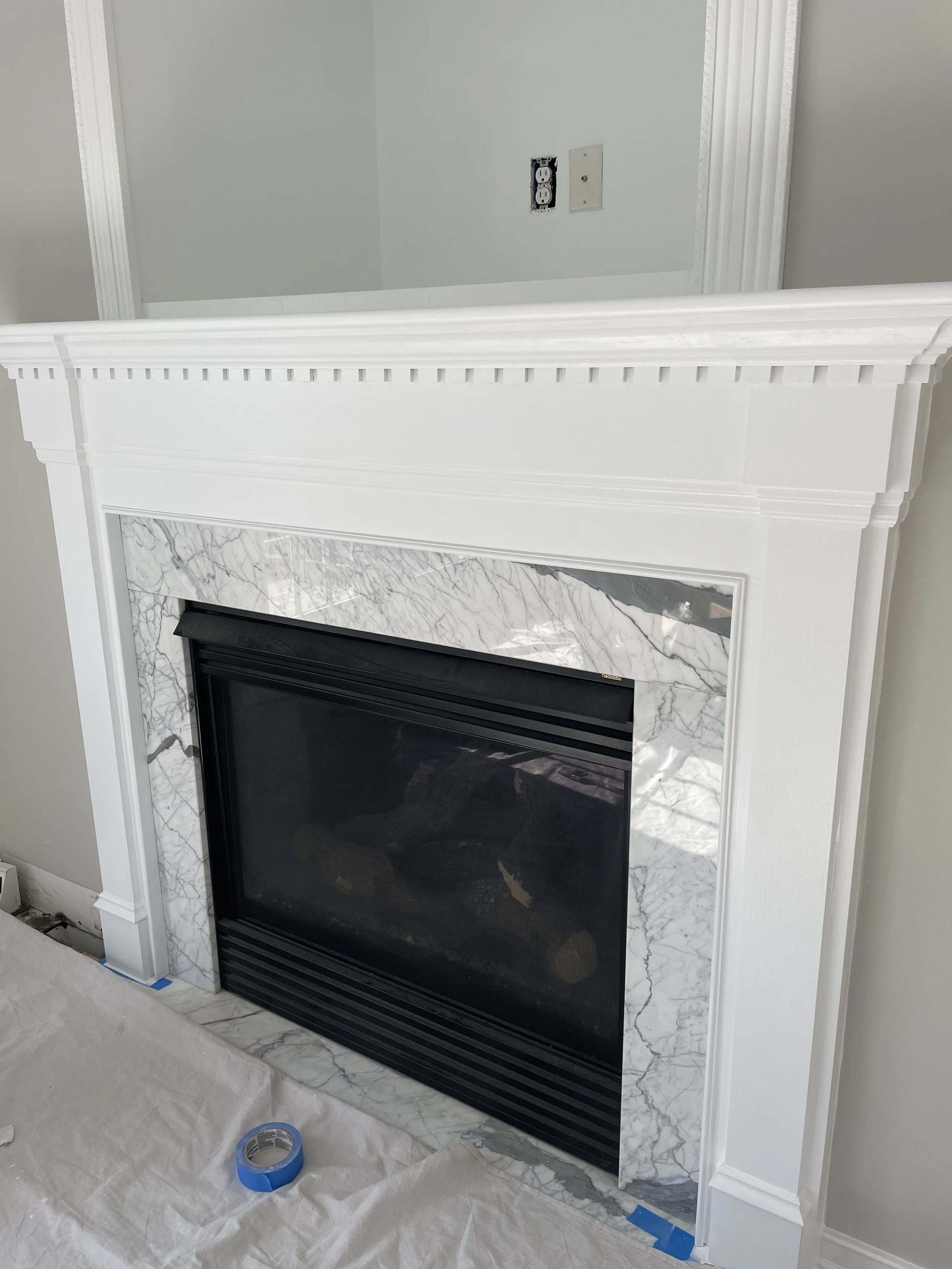
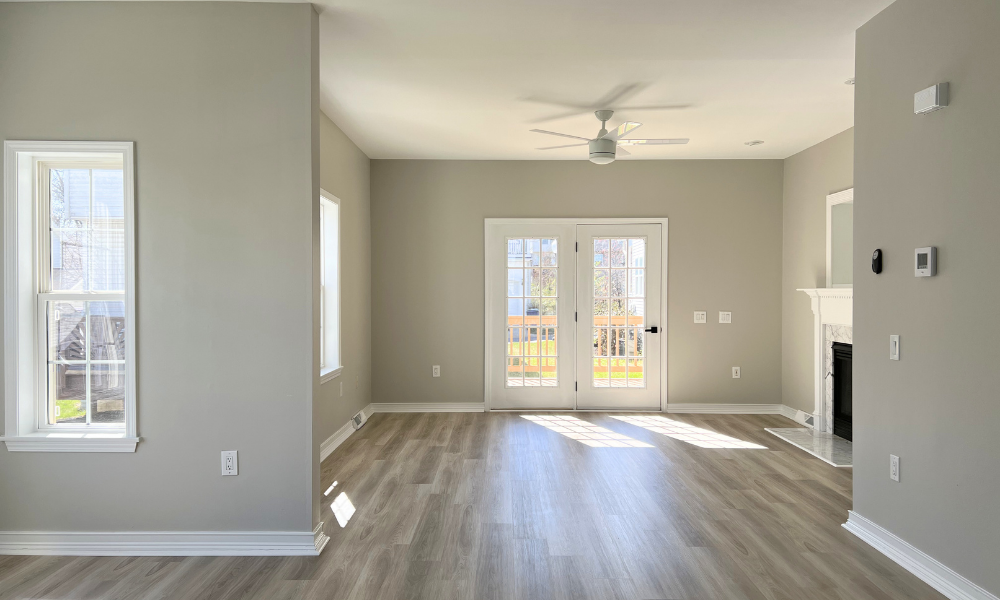
We recommended: new flooring throughout, removing the vertical blinds, replacing the ceiling fan, and painting the fireplace mantle.

 
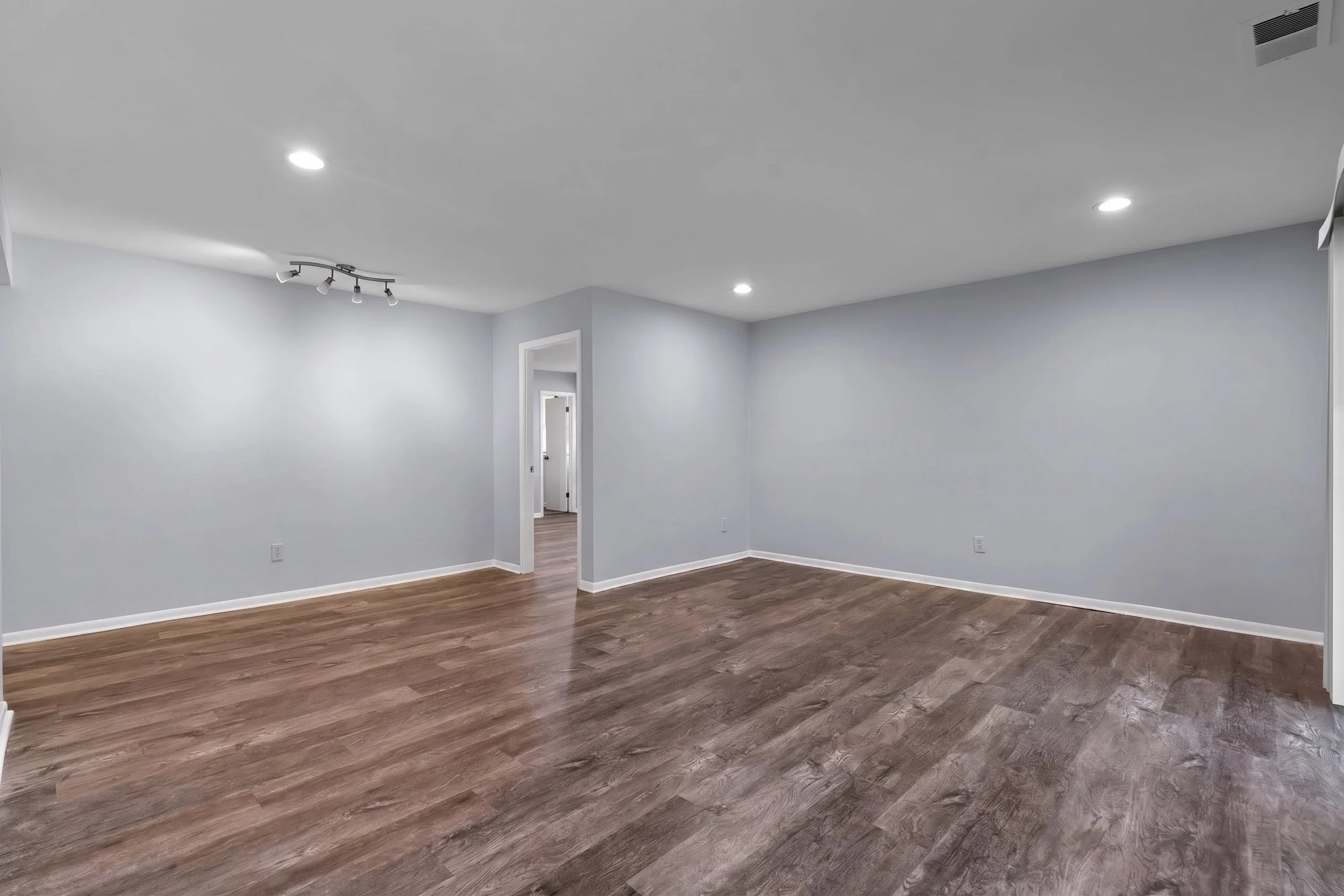
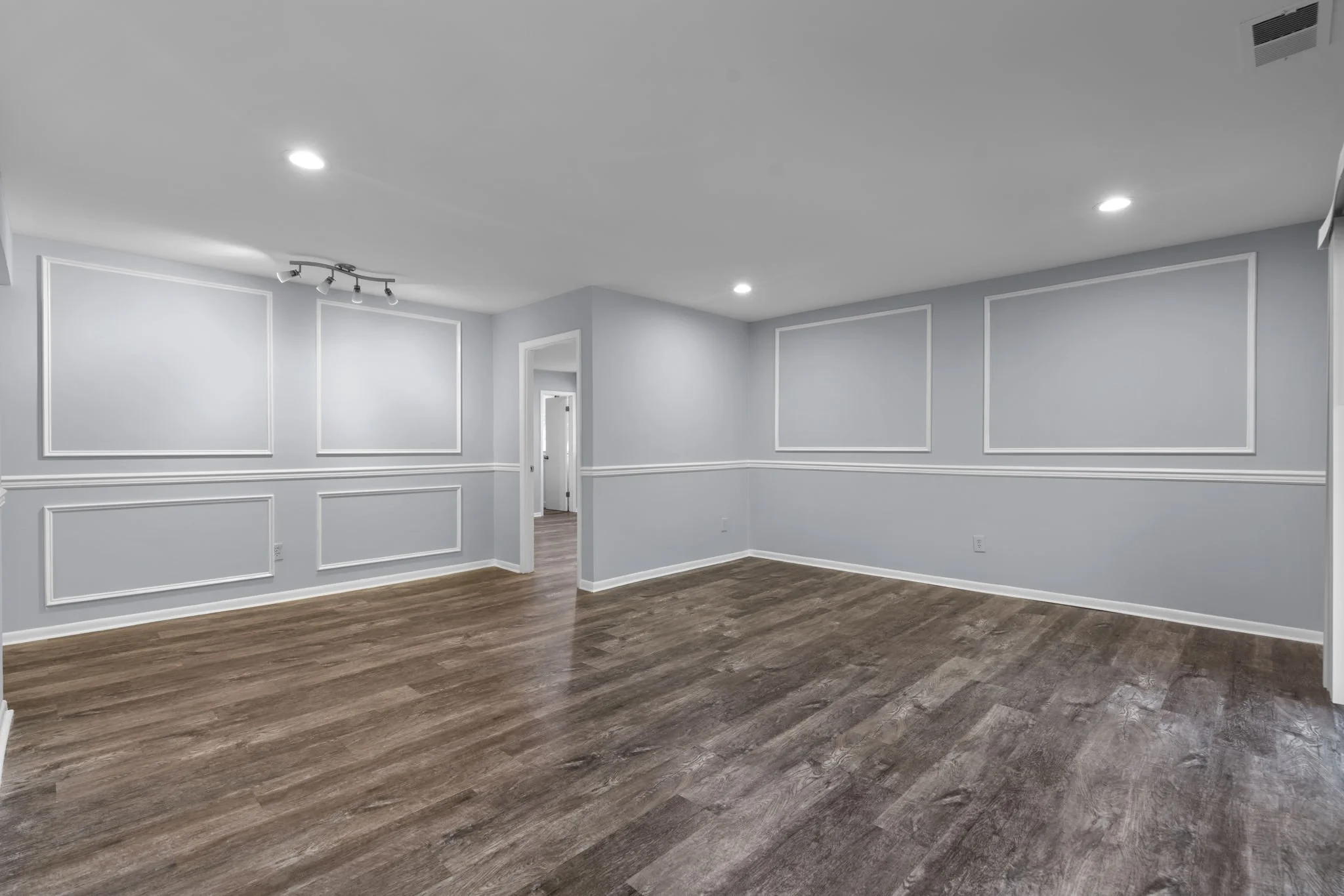
•	Living room after flooring and lighting updates, Howard County MD home sale
 

The difference was immediate. Consistent flooring created a sense of flow buyers responded to right away and the space went from choppy to cohesive.

Bathroom #1: A Targeted Refresh


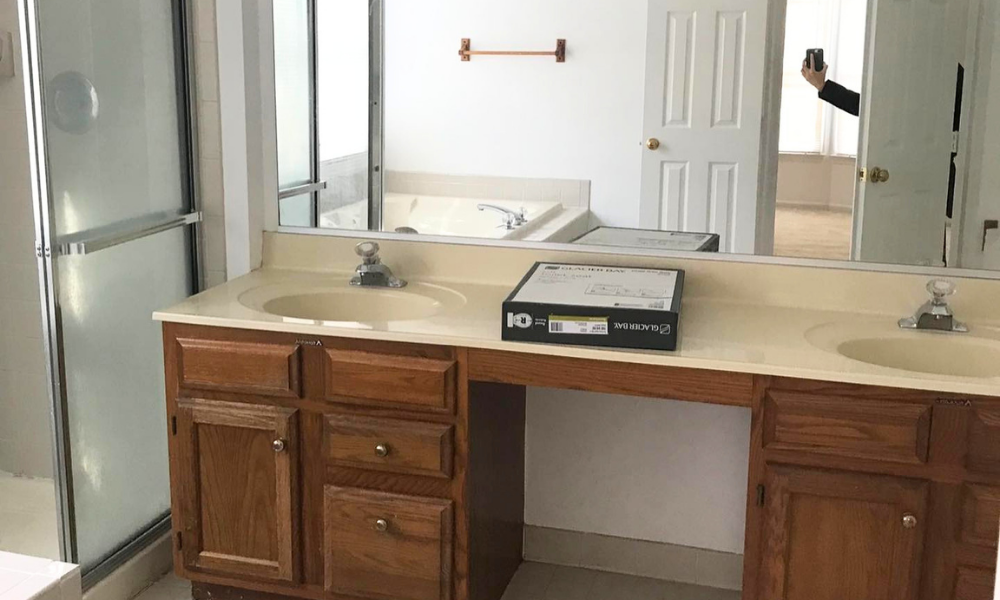
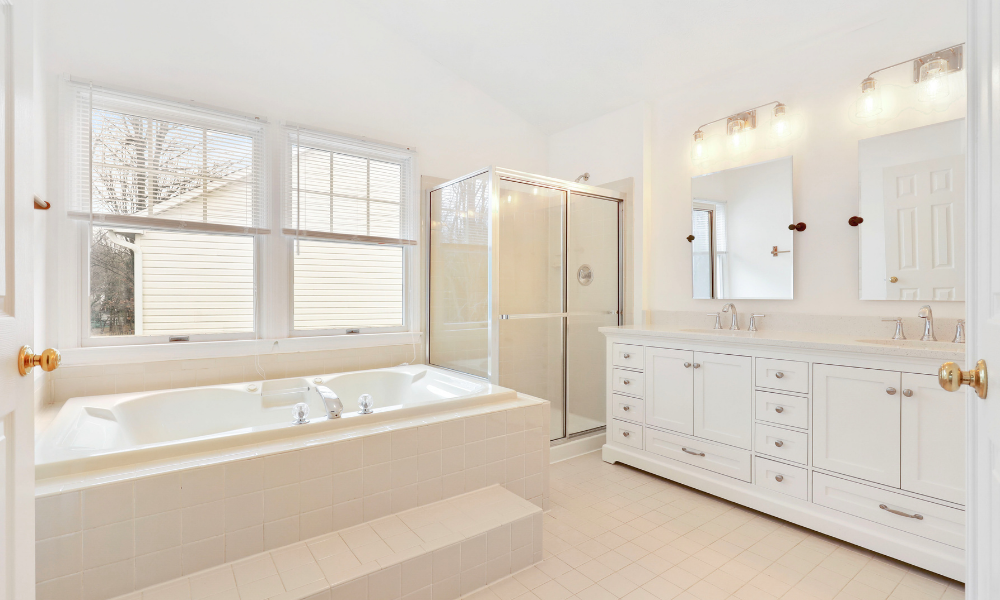
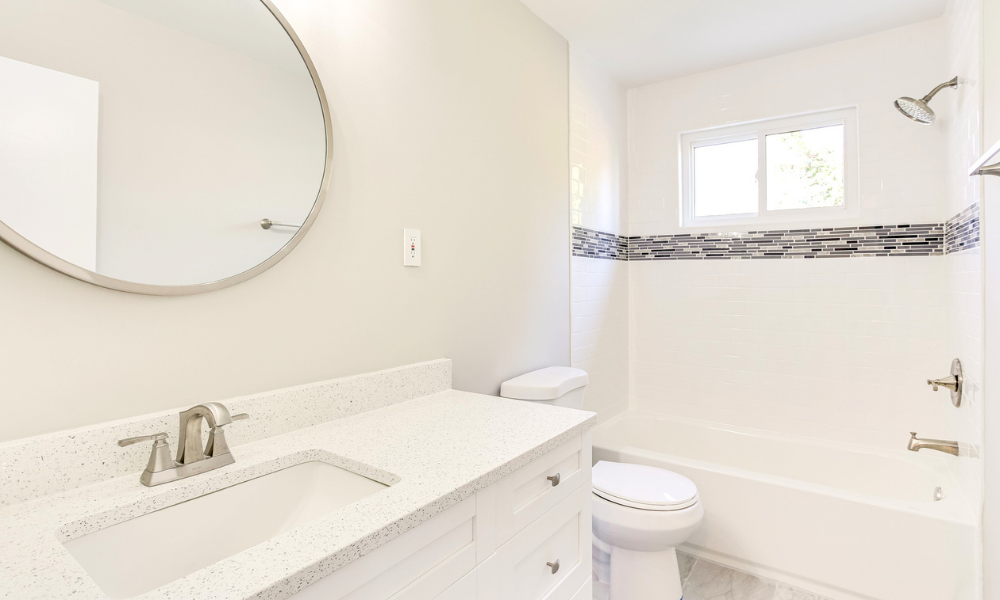
This room didn't need a full renovation, just a focused refresh. We recommended a new vanity and light fixture.

 
•	Updated bathroom vanity and lighting after refresh, Central Maryland listing
 

A new vanity, mirror, and modern lighting transformed the room. The impact far outweighed the cost.

Bathroom #2: When Full Renovation Is the Right Call

 
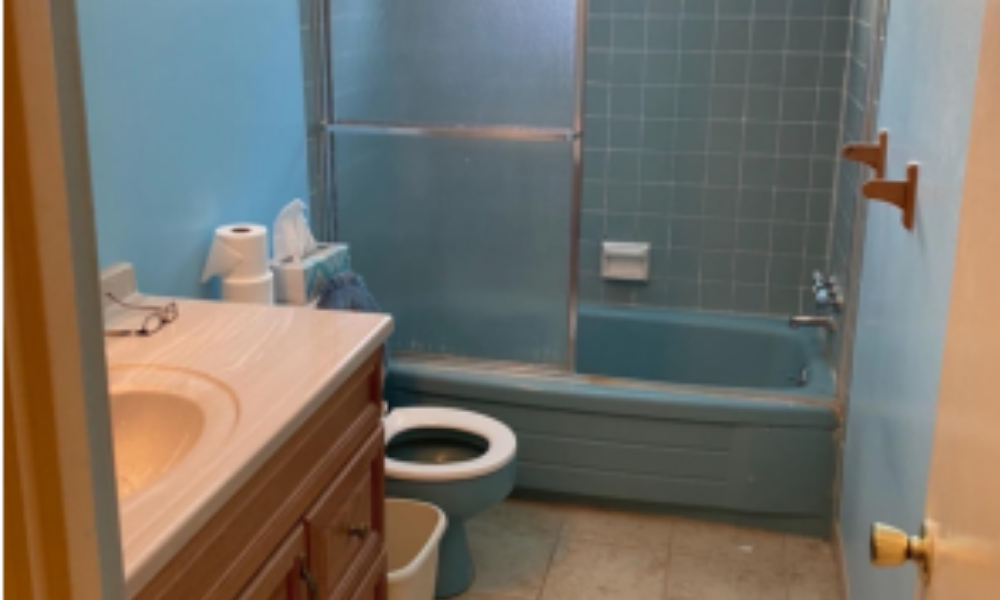
•	Blue-tiled bathroom before full renovation, Howard County MD
 

This one needed more. The original tile and fixtures were sending buyers the wrong signal, so we recommended a complete renovation, because the math fully supported it. A dated bathroom that scares off buyers or invites lowball offers often costs more in lost value than the renovation itself.


Result: that home sold in 3 days with multiple offers.

The Sellers Who Win Start the Conversation Early

The smoothest, most profitable selling experiences in Howard County almost never belong to sellers who decide to sell and list the following week. They belong to sellers who call us months, sometimes even a year or two, before they're ready.

Here's how that process works with our team:

1.   We walk the house together. No pressure, no pitch. Just an honest conversation about what you have and where you want to go.

2.   We build a prep plan. What needs to happen now, what can wait, and which updates will move the needle most with today's buyers.

3.   We connect you with trusted vendors. You're not researching painters and flooring installers alone. We've already done that work over 20 years.

4.   We guide you through every step. By the time you list, you're prepared and confident, not scrambling.

This is what we mean when we say we're educators and advisors, not salespeople. Our job isn't to rush you to market. It's to help you get there strong.

The Shortcuts That Cost Howard County Sellers the Most

If you're thinking about selling in Columbia, MD or anywhere in Central Maryland, these are the shortcuts we see backfire most often:

  • Stretching carpet instead of replacing it. Buyers notice. It reads as a patch job and makes them wonder what other maintenance items have been deferred.

  • Spot cleaning instead of deep cleaning. Professional cleaning before listing is one of the highest-ROI moves a seller can make.

  • Leaving dated light fixtures. Lighting is one of the fastest and most inexpensive ways to modernize a space. Buyers see the whole room through it.

  • Skipping fresh neutral paint. Buyers might repaint eventually, but fresh neutral paint makes photos pop and helps buyers picture themselves living there. It helps us get more feet through the front door, which means more opportunity for offers.

  • Listing before you're ready because the market feels hot. A competitive market doesn't compensate for a home that shows poorly. Preparation matters even more when the bar is higher.

FAQ: Prepping a Home to Sell in Howard County

Do I need a full renovation before I sell my house in Howard County?

No. Most homes need targeted updates, not a full renovation. Think flooring, lighting, and paint rather than a total remodel. A full renovation only makes sense when a space is actively costing you offers, the way the blue-tiled bathroom above was.

What home updates give the best return before selling?

Professional deep cleaning, fresh neutral paint, updated light fixtures, and consistent flooring tend to have the biggest impact relative to their cost.

How far in advance should I start prepping my home to sell?

Ideally a few months to a year out. That gives enough time to plan updates, get contractors scheduled, and avoid a rushed, stressful listing timeline.

Will a hot market cover for a home that isn't prepped?

Not really. Even in a strong seller's market, buyers still compare homes to each other. A home that shows poorly still tends to sell for less or sit longer than one that's move-in ready.

Busting Real Estate Myths: What’s Really True in Today’s Market?

Busting Real Estate Myths: What’s Really True in Today’s Market?

Let’s face it—when it comes to real estate, everyone’s got an opinion. Whenever we see real estate related content on Instagram or Facebook, one of the first things we ask ourselves is “Is this person doing business in Maryland?” Real estate is all about location and real estate practices can differ drastically depending on where you are in the world.

Myth #1: You Need a 20% Down Payment to Buy a Home
Myth #2: All Home Improvements Will Boost Your Home’s Value
Myth #3: Price Your Home High to Leave Room for Negotiation
Myth #4: Sellers No Longer Have to Pay a Buyer’s Agent When Selling Their Home

Myth #5: You Don’t Need a Real Estate Agent in the Digital Age

Keeping Up with Appraisals: What's New and Why It Matters

It makes me so happy to see that the blog I wrote 12 years ago explaining how appraisals work is still getting attention! With hundreds of views every year, I felt it was time for an update.

Read the Original Blog Here

A lot has changed for appraisers since 2012. The biggest change? The addition of ratings for Quality of Construction and Condition.

Previously, as you can see in the comps grid from the 2012 blog, there wasn’t a unified standard for how appraisers noted the quality of construction or the condition of a home.

  • Quality of Construction: Terms like “Average” or “Good” used to be the norm. Now, there are defined terms for quality, as shown in the table below.

  • Condition Ratings: The old terms like “Average” or “Below Average” have been replaced by a standardized rating scale from C1 to C6.

It’s still up to the appraiser to determine the appropriate quality and condition rating for each property in the report.

Here are the quality ratings used by appraisers:


Some appraisers use the quality rating assigned by the tax assessor.

Check Your Tax Record: If you pull up your tax record in SDAT, there’s a field for “Quality” with a number between 1-9. So how does the tax assessor determine the rating? The tax assessor bases this number on the dwelling’s initial construction or the quality of construction after renovations are reviewed by the assessor.

Here are the detailed Condition Ratings and Definitions:


So a rating of C1 would be used for newly constructed homes, while C6 is reserved for homes with severe damage and defects.

Other Notable Changes: Modern appraisals now include a glossary of abbreviations, definitions for updated vs. non-updated vs. remodeled, and has a standard in place for denoting full bath vs a half bath. Reports now state that three-quarter baths are to be defined as a full bath and a quarter bath (baths with only a toilet) should not be included in the bathroom count at all.

These changes help clarify the report for everyone.

Want to keep up to date on real estate insights like this? Follow us on Instagram, like us on Facebook, or sign up for our newsletter. Know an agent who wants to join a collaborative Team that takes real estate knowledge to the next level? Reach out to Wendy!

Written by Tess Loys, Team Manager for The Wendy Slaughter Team of VYBE Realty. Special thanks to Brian Feher and Carolyn Failla, two of our recommended vendors, for their added insight!

Are Zestimates and other AVMs reliable?

Are Zestimates and other AVMs reliable?

AVMs and Zestimates offer a quick and easy way to get a ballpark figure for a home's worth. While AVMs are often more accurate due to sophisticated data and professional fine-tuning, they shouldn't be the sole determinants of a property's value. They lack the nuanced insights of a local real estate expert or a detailed professional appraisal.

Estate planning in Maryland – what should I do with my primary residence?

Estate planning is a crucial component of responsible financial management, ensuring that your assets are distributed according to your wishes upon your passing. In Maryland, creating a basic trust-based estate plan can offer numerous benefits, one of which is the opportunity to retitle your primary residence into a revocable living trust. In this article, we will discuss what you need to know about establishing a trust-based estate plan in Maryland and why it may be advantageous to retitle your home into that trust.

Estate planning in Maryland involves a range of legal tools and strategies to manage and distribute your assets efficiently. These tools can help you minimize taxes, avoid probate, and provide for the seamless transfer of assets to your heirs. One of the most fundamental aspects of estate planning is the creation of a revocable living trust.

A revocable living trust is a legal entity that holds and manages your assets during your lifetime and allows for their efficient transfer upon your death. As the grantor (the person creating the trust), you have full control over the trust and can amend or revoke it at any time. Note that as part of a trust-based estate plan, you should also receive a will (yes, when you have a trust, you still need a will), powers of attorney (which are vitally important should you become incapacitated) and an advanced directive, sometimes referred to as a living will. 

For the purposes of this article, we will focus on the potential benefits of retitling your Maryland primary residence into your revocable living trust.  ‘Retitling’ assets into your revocable living trust comes at the end of the process because, well, you must have a validly executed revocable living trust before you can retitle anything into it! 

If you are single, the process will likely only require one deed.  If you are a married couple, you will want to first have your attorney review your deed and determine how you currently hold title to your property.  If you lived together before you were married, or if you owned a home in one name prior to marriage, depending on your situation, you may need to have two new deeds created – one to get the property into ‘Tenants by the Entirety’ (or TBE as it’s often abbreviated) and another to then take that TBE property and title that TBE property into the name of your revocable living trust.  Maryland has a wonderful law that, if followed carefully, allows otherwise elusive ‘asset protection’ to apply to the creditors of your spouse as it relates to your primary residence once it is properly retitled to your revocable living trust.  In fact, even if you sell your home and downsize, you can continue to protect the proceeds of that sale (by putting them into an account in the name of that same revocable living trust). That is a powerful tool to have as part of your estate plan.  Two important notes here:

1) We are talking about your primary residence in Maryland. If you own other properties in other states, or even in Maryland, you must talk to an experienced estate planning attorney before you attempt to change title to those properties and

2) There are several specific steps that must be taken for your home to be protected against any future claims against your spouse and one of the most important is to be certain that there are no creditor claims against your spouse already.   

Another benefit to retitling your primary residence into your revocable living trust is probate avoidance.  Because our homes here in Maryland are often very valuable, and because probate fees (and any associated attorney fees) are assessed based on the value of the probate estate, the analysis to determine whether to invest in a quality estate plan can be relatively straightforward and doing so can help your loved ones avoid probate, maintain privacy, and secure your legacy.

Amy Lazas, Esq., M.A.S.
Providence Law Group, LLC


I would like to acknowledge the assistance of ChatGPT in generating and refining content for this article.

Disclaimer: This article is for informational purposes only and does not constitute legal advice. It is essential to consult with a qualified legal professional for advice specific to your situation. No attorney-client relationship is created by reading this content. The information presented here may not be current or accurate. Laws vary by jurisdiction, and the information provided may not apply to your circumstances.

Planning for the Next Phase


When you or your loved one begins the search for the right assisted living community, it’s hard to know where to start. Every community has different levels of service they provide to their residents. As you begin your research, it’s a good idea to sit down and learn about the various levels of services available to you.

Lorien Harmony Hall, for example, provides a continuum of care allowing residents to remain within Lorien, even if their needs change over time.

Here are the five levels available at Lorien:

Level 1: For those who require minimal assistance with activities of daily living.

Level 2: Includes level one services with 24-hour caregiver service supervised by licensed nurses.

Level 3: Includes level two services with a higher level of medical and personal care, as well as one-person transfer assistance and escorts (if needed).

Level 4: Includes level three services with moderate transfer assistance and specialized diet modifications.

Level 5: Includes level four services in addition to Hoyer lift and two-person transfers, total feeding assistance, hospice care, and more.

This continuum of care sets Lorien Harmony Hall apart, providing residents with peace of mind, knowing that they won't have to leave their familiar surroundings and support system if their health condition changes.

It’s also important to consider the amenities that might be needed. Examples of some of Lorien’s amenities include:

  • 24-hour Site Nursing Care: Lorien doesn't just have nursing care available during the day; we provide it around the clock. This means that residents and their families can have peace of mind, knowing that there is always a qualified nurse on hand to address any medical concerns.

  • On-site Dialysis: Having on-site dialysis can be a game-changer. That’s where a community like Lorien Harmony Hall comes in, offering this vital service, and ensuring that residents receive the care they need in a beautiful community without the inconvenience of off-site appointments.

  • Two-Person Transfer Assistance & Hoyer Lift: Lorien recognizes that mobility challenges can vary greatly among residents. Our inclusion of Two-Person Transfer Assistance, and the use of Hoyer lifts, ensures that individuals with limited mobility receive the specialized care they deserve.

  • Chronic In-House Wound Care Management: Healing wounds properly is crucial for overall well-being. Lorien takes wound care seriously, offering in-house management to expedite the healing process and minimize discomfort for residents.

  • Sliding-Scale Diabetic Management: Diabetes management is a delicate balancing act. Lorien's commitment to sliding-scale diabetic management helps residents maintain their health by carefully monitoring and adjusting insulin levels as needed.

  • Bolus Tube Feeding: Nutritional needs can vary greatly among residents, and Lorien understands this. Bolus tube feeding is another service we provide, ensuring that residents with specific dietary requirements receive the nourishment they need to thrive.

Learn more about Lorien Harmony Hall and all of its amenities and services by clicking here.

August Real Estate Stats


 Here are your Central Maryland real estate stats for July 2023. Click the links below to get information for each county.

Anne Arundel County

Baltimore City

Baltimore County

Carroll County

Harford County

Howard County

It’s not huge, but we are seeing a very slight uptick in the number of listings on the market for some counties. On a national level, existing home sales were down 17.1% for the 2nd quarter of 2023 in comparison to 2024. Existing home sales were forecasted to be down only 9.1% for the 3rd quarter of the year and have an increase of 9.6% for the 4th quarter of this year. Only time will tell, but we are seeing an increase in listings on our Team as well. 🤞

Most counties in Central Maryland still show that homes, on average, are selling for more than their original list price. Days on market are still relatively low and the median sold prices for all counties is higher than it was in August of 2022.

Don’t see your county listed? Reach out to us! We’d be happy to send your county stats over to you. 

Conscious Culture in Real Estate: A Conversation with Wendy Slaughter

Conscious Culture in Real Estate: A Conversation with Wendy Slaughter

As a founding member of the Central Maryland chapter of Conscious Capitalism, Wendy was psyched to sit down with Wendy Baird, president of insight180 and fellow Conscious Capitalism of Central Maryland (C3MD) founder, to talk about how she practices conscious culture and how it has impacted her business.

Eco-Friendly Gardening: Natural Weed Killer for a Greener Home

Eco-Friendly Gardening: Natural Weed Killer for a Greener Home

Looking for green alternatives for common household tasks? We believe that making eco-conscious choices in and around your home can be easy! One area where we can make a significant impact is in our gardens and lawns. Instead of resorting to harsh chemicals, why not try a natural weed killer that's both effective and environmentally friendly?

Solving seller problems: I know my home will sell quickly but where will I go?

Solving seller problems: I know my home will sell quickly but where will I go?

“Sure, my home will sell quickly (and hopefully for more money!) but where will I go?”

This was Sarah’s concern when she decided she was ready to sell her townhome in Catonsville. It’s the concern we hear the most from people who want to sell but just can’t figure out how it could work.

So how did we help Sarah accomplish her real estate goals? Read on to find out!

5 Reasons Why People Love Moving to Maryland

5 Reasons Why People Love Moving to Maryland

Are you a fan of the Chesapeake Bay State? Are you or a friend considering making a move to Maryland? Here are some of the top reasons why people love living here! If you’re a Maryland native OR have relocated here and LOVE it, let us know if you agree with our top 5. If you’re considering moving here, read on to find out why we completely support your decision to do so!

Eco-Friendly Home Tips

Eco-Friendly Home Tips

Though some of us dream of purchasing a newly constructed LEED-certified home, built with sustainability in mind, most people find themselves purchasing an older home and then retrofitting it to make it more energy efficient.

 Not sure where to start? Check out this DIY Energy Efficiency Checklist for retrofitting an existing home. This checklist will help you prioritize projects and get you started on your green journey.

Homeowner Tips


Whether you just purchased a home, or you’ve owned one for years, we have some homeowner tips just for you! Read on to find out some of our Team’s favorite tips for homeowners.

Gardening with a purpose!

We all know about curb appeal, but gardening doesn’t have to be limited to just having a pleasing aesthetic. Plan your garden to help you with energy savings! 

Plant deciduous shrubs and trees to shade the southern and western walls of your home and your air compressor. In the spring and summer, the plant’s leaves will help shade your home. After the trees/shrubs lose their leaves in the cooler months, the sun will help to passively heat your home. #genious

The northwestern walls of your home receive the least amount of sun so consider planting evergreen trees there to protect your home from winter winds. Want to reduce your water usage? Consider planting native plants which tend to require less water and maintenance once established.

Choose the right project to tackle.

Thinking about adding a bathroom in your basement? Maybe you’ve thought about replacing your vinyl siding? If you’re considering a “non-urgent” project, you might want to check out the Cost Vs. Value report that Remodeling Magazine releases every year. Here’s the report for 2022.

The report compares the average cost for remodeling projects with the value of the said project at resale. Keep in mind that the report compares cost vs. value at a regional level. If you are comfortable providing them with your contact information they’ll give you the data at a city level. 

Want to take it a step further? Reach out to us! Real estate agents can look at your specific market to determine what upgrades are common for homes that are comparable to yours. This may help you decide if the project you’re considering is worth your money and time!

Applying for the Homestead Tax Credit

If you haven’t done so already, you should apply for the Maryland Homestead Tax Credit. The Homestead Tax Credit limits the increase in taxable assessments each year to a fixed percentage.

Fill out an application to slow the rate of your tax increase. Though you can apply at any time, most homeowners apply within the first 6 months of owning a home. If you had applied in the past, 2007 legislation changed, and homeowners had to re-apply in order to continue eligibility. Legislation passed in 2021 that makes the credit retroactive for 1 year.

You can download a PDF application from the website, or you can apply online at:
https://sdathtc.dat.maryland.gov/

Consider getting a Home Equity Line of Credit

This is a great tool to help you prepare for the unexpected. If you ever have an emergency home repair or you decide to tackle a large construction project, the home equity line funds can help you cover the expense. 

A Home Equity Line of Credit (HELOC) is just what it says it is – a line of credit based on the equity in your home. Wait, what?

When you apply for a HELOC, the lender will determine how much equity you have in your home by conducting an appraisal. Equity is determined by taking the market value of your home, less the amount of money you owe. For example, your home is worth $500,000 and you have $450,000 remaining on your mortgage. So, you have $50,000 worth of equity which can be a line of credit for you to use when needed (only some lenders lend 100% of equity).

If you decide to use the line of credit, it would essentially be a 2nd mortgage on your home that would be paid off when you sell your home.

Think a HELOC is a good option for you? Reach out to us. We are happy to refer you to local lenders!

Building Equity

Now that we’ve explained equity, consider building more equity in your home! Even if you aren’t planning on selling anytime soon, it’s never a bad idea to build equity. Consider adding exterior amenities such as a deck or patio. Get the basement finished or add an additional bathroom. The Cost Vs. Value report or insight from a Realtor is a great way to ensure you are on the right track!

One last quick tip – consider making an extra payment each year on your loan to help reduce your monthly interest expense a little bit at a time.

Preparing for your next adventure!


Downsizing, whether to a smaller home or a specialized community, can seem overwhelming. You need experienced professionals who can guide you through the process.

That’s where we come in!

Our Team has created the Platinum Program which has everything you need in one place to reduce the stress of selling your home and assisting you with your next move.

The first step: Planning

Listening to you and understanding your specific needs and concerns is our first step. During our first meeting, we will design a custom plan for your move based on your needs.

Some of our specialized services:

  • Communicating with multiple family members about the move.

  • Referring you to quality vendors for services: everything from contractors to organizers. We’ve got you covered!

Once we have a plan in place, we move to Step 2: Preparing the Home for Sale

Preparing your home for sale is an important part of the process and it will ensure you sell for the best price. Preparing the home consists of:

  • Decluttering and organizing

  • Donating or selling items

  • Hauling furniture

  • Considering storage solutions

  • Hiring contractors (we have plenty of recommendations) for repairs/updates and for moving items.

Home Valuation

Our program  includes a free Home Market Analysis to assess the value of your home in its current condition. We can also provide a referral to an experienced appraiser, if needed.

Should you choose to do repairs and updates to your home, we can re-assess your home’s value before listing it for sale.

Staging & Professional Photography

Staging and professional photography is critical to ensuring you get top dollar for your home. The Platinum Plan includes:

  • A paint consultation.

  • Staging with the furniture already available in the home with a staging professional.

  • Virtual staging in the event the home is going to be listed vacant.

  • Professional photography and marketing collateral.

With the Platinum Plan, we all work together to minimize your stress and create a positive experience. Ready to make your next move? Reach out to us and mention the Platinum Plan!